
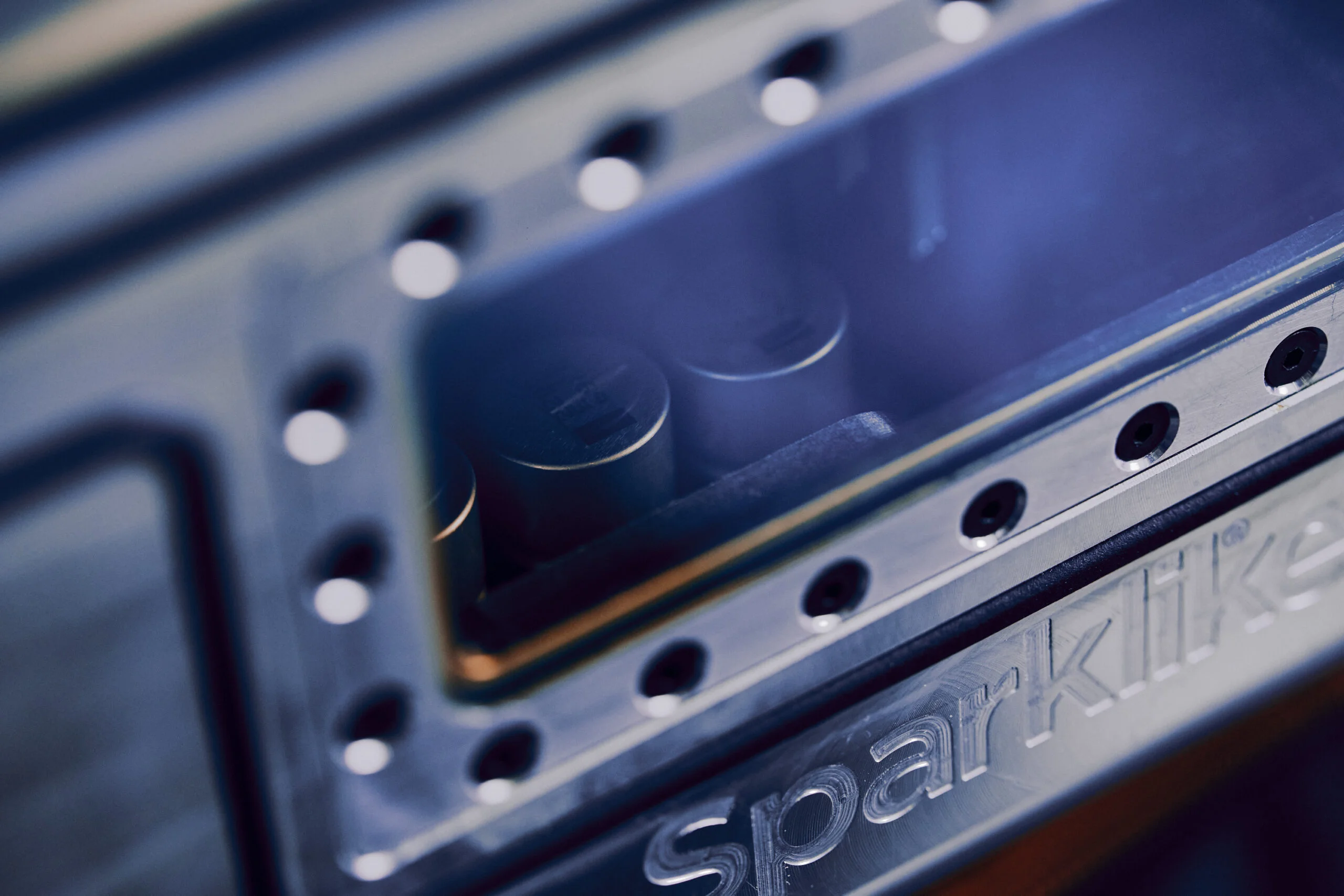
Introduction of Sparklike TDLAS Devices
Sparklike’s introduction of Tunable Diode Laser Absorption Spectroscopy (TDLAS) devices has changed the status quo in insulating glass quality assurance. This nondestructive method measures insulating gas content in glass units through low emissivity coatings (LoE). This Laser Absorption Spectroscopy technology operates at a 760 nm wavelength, allowing optimal quality control during production and post-installation.
Evolution from SES to TDLAS
Sparklike pioneered non-destructive gas measurement with Spark Emission Spectroscopy (SES), which became the industry standard for double-glazed and triple-glazed units with at least one or two clear panes, respectively. However, as low-emissivity (LoE) coatings grew in popularity, the industry needed a more advanced technology that permitted measurement through LoE coatings. This led to the development of Sparklike Laser devices, which can accurately measure through various coating types.
Importance of Gas Content in Insulating Glass Units (IGUs)
IGUs are integral in various applications for their thermal and acoustic insulation qualities, dependent on the correct levels of inert gases like argon or krypton. Traditional methods of measuring gas content were invasive and costly. In contrast, Sparklike Laser devices allow for non-invasive and precise validation, significantly reducing potential replacement costs
Performance and Validation of TDLAS Devices
TDLAS devices have been proven to work effectively with most glass coatings, categorized based on their spectral transmission values at 760 nm. Independent studies by IFT Rosenheim have shown that TDLAS devices align closely with gas chromatography in accuracy but are more cost-effective and faster, offering measurements within 20 to 30 seconds without damaging the IG units.
Challenges and Future Prospects
The success of Sparklike Laser devices in measuring IG units is primarily dependent on compatibility with glass coatings. Coatings that permit low transmission percentages at the 760nm wavelength, such as triple silver coatings, may require validation to ensure measurement accuracy. However, TDLAS technology’s applicability remains broad and beneficial for manufacturers of residential windows and commercial applications. As the demand for energy-efficient buildings rises, advancements in TDLAS technology may further enhance its universal application, reinforcing its essential role in the industry.
Checking Glass Compatibility Online is One Step Away
To facilitate the analysis of compatible glass types with the Sparklike Laser Technology, GED has developed a web configurator that will be released soon on the GED website. It will be accessible through web browsers on desktop & mobile devices. Here’s a sneak peek

Conclusion
Sparklike’s Laser devices, tuned to 760 nm wavelength, provide a critical solution for non-destructive gas measurement in IG with one or more LoE surfaces. Ensuring high-quality production across various manufacturing segments. Despite some challenges with specific coatings due to their spectral block characteristics, continuous innovation and validation efforts are likely to increase the technology’s applicability, promising a future of efficient and flawless insulating glass production.

Written By: Ashraf Hussein
Ash has 10 years of experience working in the North American fenestration industry. As the Product Marketing Manger – IG, Ash manages all commercial activities for GED IG products. These products include glass cutting systems, Intercept® spacer fabrication systems, glass washers, ovens, assembly systems, gas filling systems and other associated products. His expertise lies in product development and sales and customer support programs as well understanding IG manufacturing use among customers.